In today's rapidly expanding renewable energy sector, wind turbines stand as towering symbols of clean power generation. However, these massive structures face constant environmental stresses that challenge their structural integrity. Whether you're a wind farm developer, turbine manufacturer, or maintenance engineer, ensuring the longevity of turbine blades represents a critical operational concern. This comprehensive guide explores how advanced fiberglass mesh technology—including specialized cut mesh variants—provides effective reinforcement solutions for wind energy applications, addressing durability challenges while supporting sustainable energy infrastructure development.
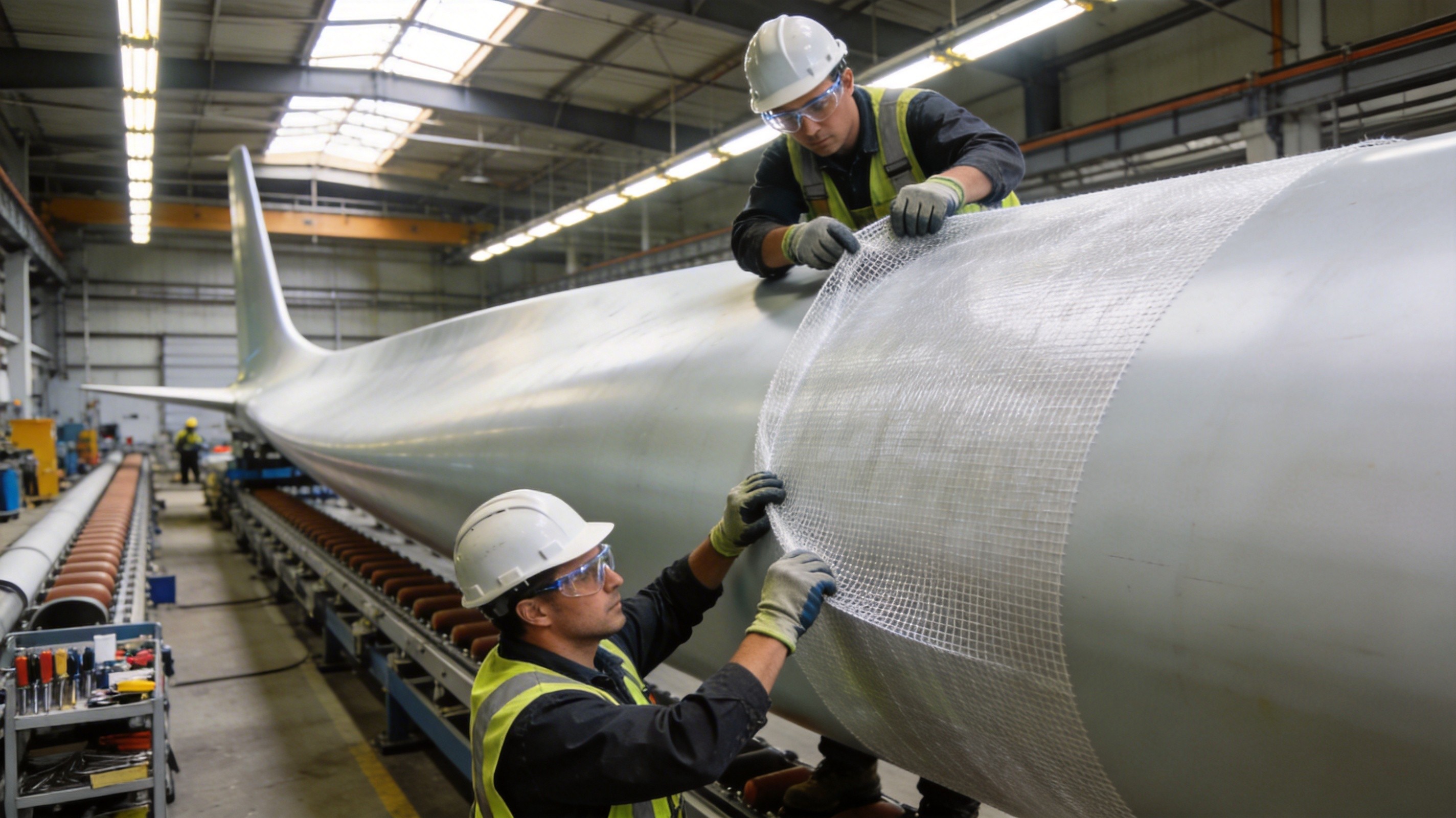
Caption: Industrial workers carefully applying fiberglass mesh reinforcement to a wind turbine blade during the manufacturing process.
Problem Statement: The Challenges Facing Wind Turbine Blades
Wind turbine blades operate under some of the most demanding conditions in modern engineering. These colossal structures—often exceeding 80 meters in length—must withstand:
Extreme Weather Conditions: Constant exposure to high winds, temperature fluctuations, UV radiation, and precipitation
Dynamic Loads: Cyclical stresses from rotation, gravity, and aerodynamic forces that cause material fatigue
Impact Damage: Potential strikes from birds, hail, or airborne debris
Manufacturing Defects: Micro-cracks and voids that can propagate over time
Moisture Infiltration: Water ingress that compromises composite materials
Without proper reinforcement, these factors lead to:
Fiberglass mesh has emerged as the industry-preferred solution for wind turbine blade reinforcement. Unlike traditional reinforcement methods that add excessive weight or require complex installation, fiberglass mesh offers a balanced combination of strength, flexibility, and ease of application.
How Fiberglass Mesh Works in Blade Construction
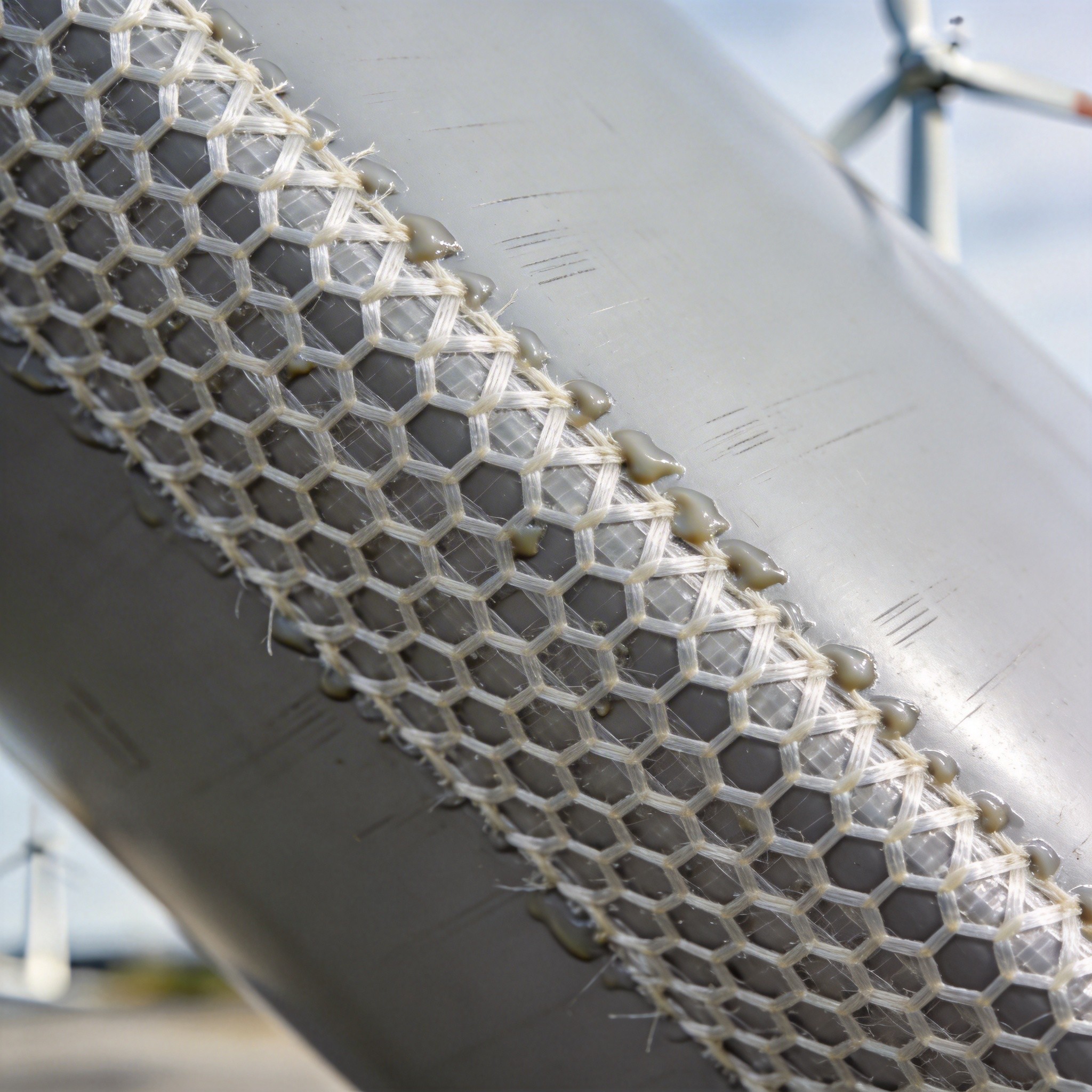
Fiberglass mesh consists of woven glass fibers coated with protective materials that enhance durability and adhesion properties. When integrated into turbine blade composites, it creates:
Crack Arrestment System: Distributes stress loads to prevent crack propagation
Impact Resistance Layer: Absorbs and dissipates energy from strikes
Moisture Barrier: Reduces water infiltration into composite layers
Fatigue Resistance: Withstands millions of load cycles without degradation
The result is a reinforced blade structure that maintains aerodynamic efficiency while significantly extending service life.
Product Application: Integrating Fiberglass Mesh in Wind Turbine Manufacturing
Subsection: Manufacturing Preparation
Successful fiberglass mesh integration begins with proper preparation:
Surface Treatment: Blade molds are prepared with release agents and gel coats
Material Selection: Choosing the appropriate mesh weight and weave pattern based on blade design requirements
Environmental Control: Maintaining optimal temperature and humidity conditions for proper adhesion
Quality Verification: Inspecting mesh rolls for consistency and defects before application