In today's construction and renovation projects, exterior wall durability remains a critical challenge. Whether you're a professional contractor managing large-scale commercial buildings or a specialized installer working on residential EIFS systems, maintaining wall integrity against environmental stressors is essential. This comprehensive guide explores how alkali resistant glass fiber mesh provides effective solutions for exterior insulation and finish systems, ensuring long-lasting protection and aesthetic appeal.
Common problem: Cracking and degradation in exterior wall surfaces without proper reinforcement
Problem Statement: Why EIFS Systems Fail Without Proper Reinforcement
Exterior Insulation and Finish Systems (EIFS) have revolutionized building envelopes with superior insulation properties, but they face significant challenges:
Alkali Attack: Portland cement-based base coats create highly alkaline environments (pH 12-13) that degrade ordinary glass fibers
Thermal Stress: Temperature fluctuations cause expansion and contraction, leading to micro-cracks
Impact Damage: Building corners and edges are vulnerable to physical impact from equipment, vehicles, and environmental forces
Moisture Penetration: Water infiltration through cracks causes insulation degradation and mold growth
Structural Movement: Building settlement and wind loads create stresses that require flexible reinforcement
Traditional reinforcement materials like standard fiberglass mesh or steel mesh often fail in these harsh conditions, resulting in:
Visible cracking patterns across wall surfaces
Reduced insulation performance
Costly repair cycles every 5-7 years
Compromised building envelope integrity
EIFS installation requires proper mesh reinforcement throughout the building facade
Solution Overview: Alkali Resistant Technology
Alkali resistant glass fiber mesh has emerged as the industry-preferred solution for EIFS reinforcement. Unlike traditional meshes that degrade in alkaline environments, this specialized material combines zirconia-rich glass fibers with advanced coatings to withstand pH levels up to 12.5.
Core Advantages:
Chemical Stability: Zirconia content provides inherent resistance to cement alkalinity
High Tensile Strength: 50-75% stronger than standard meshes for superior crack prevention
Flexibility: Maintains integrity during building movement and thermal cycling
Corrosion Resistance: Unlike steel mesh, won't rust or stain finishes
Lightweight: Easy handling reduces installation time and labor costs
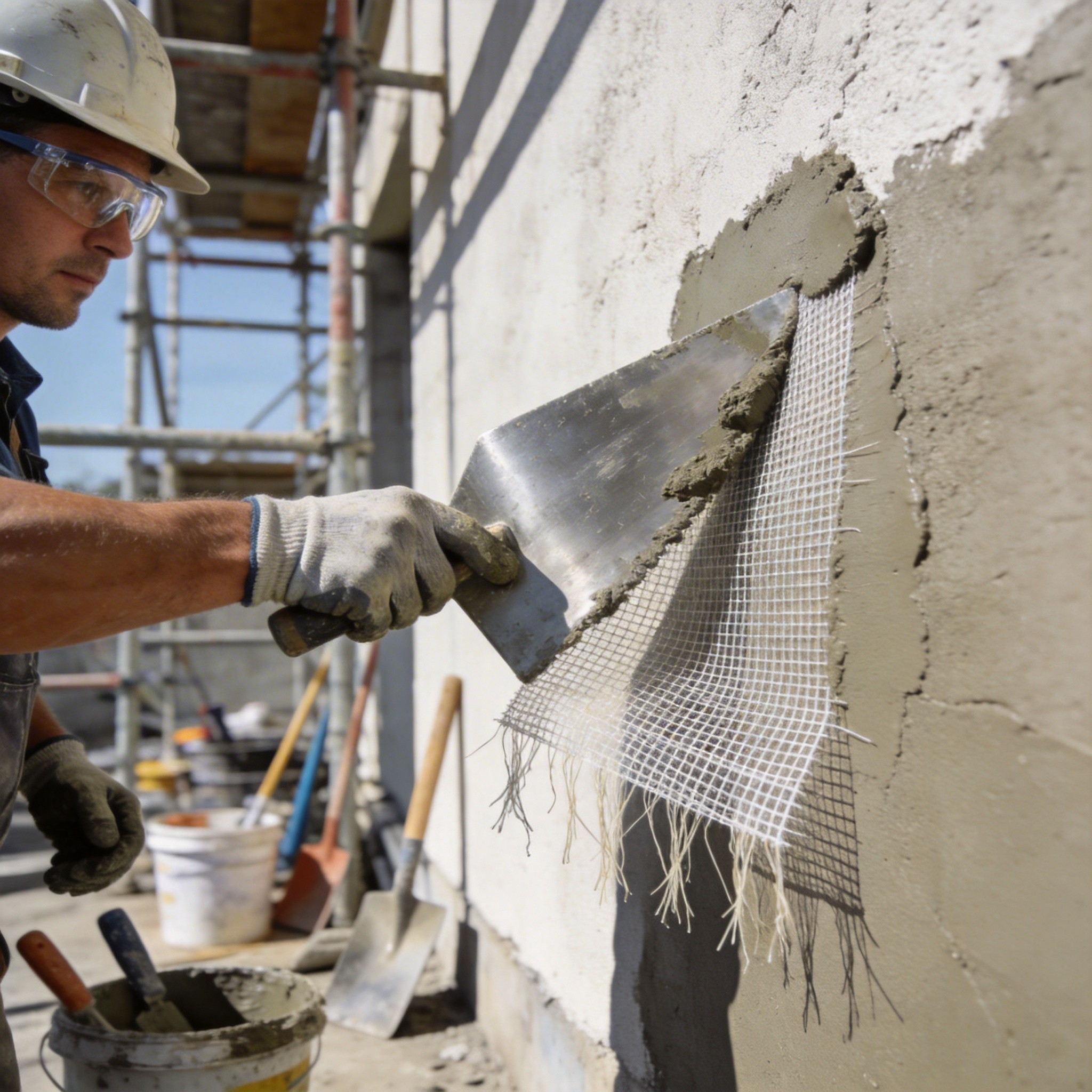
Professional installation of alkali resistant mesh using proper techniques